
Long before Netflix queues and instant playback became second nature, a team of innovators gathered in a hotel ballroom to attempt something no one had ever seen before: true video-on-demand. In December 1994, Time Warner’s Full Service Network (FSN) wasn’t just a product launch—it was a live-wire experiment that hinted at the future of how the world would watch television.
In this story, media historian and industry veteran Craig Leddy takes us inside that moment: the awe, the risk, the near-disaster, and the breakthrough that quietly set streaming on its current course. FSN may have been short-lived, but its influence runs straight through today’s digital media ecosystem—and its lessons remain just as relevant for innovators and leaders navigating what comes next.
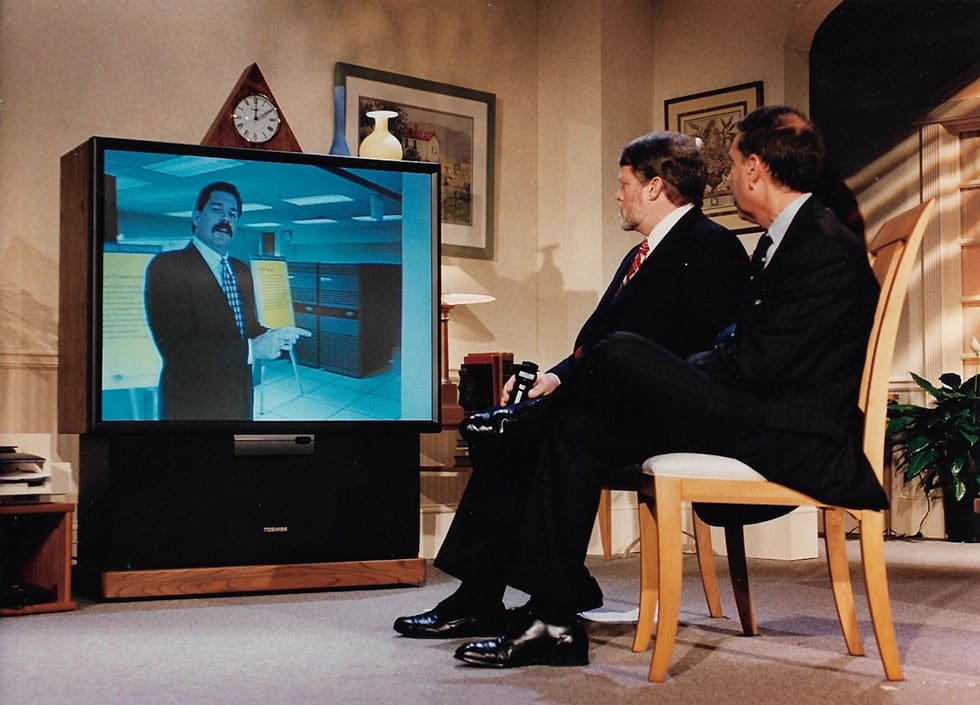
On stage, the Full Service Network launch event in December 1994 featured Time Warner’s Jim Ludington talking on-screen to Jim Chiddix and Jerry Levin (photo courtesy of Jim Ludington).
On December 14, 1994, I was crammed into a crowded Sheraton Hotel ballroom in Orlando, FL, as part of a 300-member global press corps. The press was invited there to witness what was billed as a “time machine” that would provide a glimpse into the future of media and technology.
On the ballroom stage, Jerry Levin, CEO of Time Warner, and Jim Chiddix, CTO of Time Warner Cable, prepared to launch the Full Service Network (FSN), the first digital interactive cable system. Time Warner, then the largest media conglomerate in the world, sought to lead the industry by offering on-demand movies, virtual games, interactive shopping, and other interactive TV services. It was a highly ambitious undertaking since virtually all the necessary hardware and software had to be created from scratch.
To demonstrate the new video-on-demand capability, the executives used a newly invented TV remote to order The Specialist, a Warner Bros. movie starring Sylvester Stallone and Sharon Stone. The movie popped up and began playing. Levin used the remote’s fast-forward function to skip through the movie in 10-minute increments, lightning fast.
The audience gasped and even skeptical reporters applauded. Seeing a streamed movie handled with on-demand features for the first time was magical. It was like silent movies going to talkies or Dorothy stepping from black-and-white into Munchkinland Technicolor.
What we didn’t know was that the FSN network – using expensive, primitive digital technologies – kept crashing the night before and teetered on the brink of collapse, threatening a public humiliation for Time Warner.
The developers fashioned what they called the Oh Jesus Switch to turn on a backup network if necessary. If the backstage managers saw that the network was crashing, they were to yell “Oh Jesus!” into their headset microphones to signal the engineers to start the backup.
The live launch was a high-wire act that became an amazing success story. I covered the FSN event while serving as editor of Cablevision magazine, a leading trade of the day. I continued to follow FSN and related developments as digital technology transformed media, entertainment, and telecommunications. I got to know the FSN developers, many of whom went on to become industry leaders.
Years later, as Netflix, Amazon Prime, YouTube, and other streamers revolutionized entertainment and culture, the legacy of FSN and the early digital pioneers seemed destined to get swept into the dustbin of history. I thought their accomplishments were too important to overlook. Their experience also provides vital lessons that are relevant for any digital business today.
From a personal standpoint, after writing thousands of articles and reports for trade publications and clients, I wanted to take on the challenge of writing a book. I was looking for a good story. This is a darn good story.
With the help of many individuals from those pioneering days, I wrote a nonfiction book, Fast Forward: The Birth of Video Streaming, Media’s Wild Child, published by Koehler Books. Fast Forward reveals the behind-the-scenes saga of FSN and the origin story of video streaming. It recounts the streaming breakthroughs and the media disruption that ensued, offering lessons for today’s media professionals.
Following the FSN launch, the developers persevered through numerous challenges and rolled out interactive services to a 4,000-home test market. While many observers were skeptical about whether consumers would interact with TV, FSN customers enjoyed movies and TV shows on-demand, playing video games remotely with neighbors, ordering stamps delivered from the Post Office, accessing news and their bank account information, and buying pizzas from Pizza Hut, which is about the only thing that people remember about the project.
From a technological standpoint, FSN became an incubator for hybrid fiber-coaxial (HFC) architecture, digital video processes, user interfaces, and interactive applications. It was at the forefront of the transition from multicast video delivery to unicast on-demand capability. Every step of the cable distribution process from delivery to user experience had to be reimagined and redesigned.
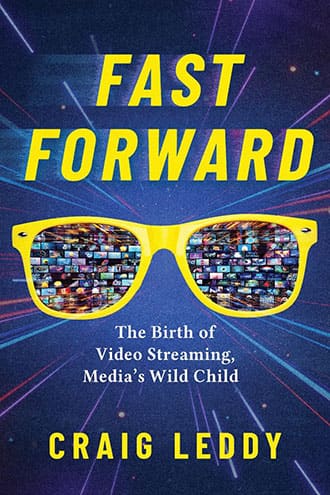
As I learned, FSN became part of an important digital lineage that revolutionized television. FSN influenced the development of the DVD, pioneered by Warner Bros. and Toshiba. Two developers who worked on FSN, Mike Ramsay and Jim Barton, founded TiVo, the first digital video recorder. After seeing the promise of on-demand video, cable operators across the country upgraded their cable systems for digital TV and VOD capability.
FSN yielded important business lessons too, some of which were financially painful for Time Warner. In its rush to be the first to deploy interactive TV and on-demand services, the company built an expensive prototype network that clearly couldn’t scale beyond the Orlando trial, as the company originally planned. When speeding to market, beware of the speed bumps. Time Warner also learned the danger of hype since Levin in particular had raised sky-high expectations.
In 1997, the company shut down FSN and many observers dismissed it as a failure. But Time Warner Cable used its experience to focus on a more scalable and affordable digital strategy. After spending $4,500 apiece for the FSN in-home communications terminals, the company developed a more affordable digital set-top box under a project known as Pegasus. The company ramped up broadband Internet deployment under the Road Runner brand.
Although capabilities increased for online delivery of full-motion video, streaming wouldn’t have taken off had it not been for the cable industry building a robust broadband connectivity network to enable it. Early attempts at online video were plagued by slow downloads, crashes, and interminable buffering. Cable’s DOCSIS-based high-speed Internet services eventually provided a reliable conduit to successfully stream movies and countless other fare.
The success of broadband Internet became a double-edged sword for cable providers. Broadband became a profitable mainstay of cable’s bottom line. But it also gave rise to the over-the-top TV phenomenon as Netflix and other streamers rode freely on cable’s infrastructure. That fueled the cord-cutting trend as consumers dropped their pay-TV subscriptions in favor of streaming.
Today video streaming is the most watched and disruptive force in media. Ironically, the company behind its birth, Time Warner successor Warner Bros. Discovery, is at the center of an acquisition battle between Netflix and Paramount Skydance based largely upon streaming’s potential.
FSN provided another benefit that perhaps was unexpected. It populated the industry with a young army of intelligent, spirited innovators who were emboldened by their experience and ready to lead the digital revolution.
The list of FSN alumni is a who’s who of cable and broadband executives. Much of their legacy has been preserved at Syndeo Institute at The Cable Center in oral histories and other archives.
Among those who played prominent roles in FSN and related digital developments were Cable Hall of Fame members Levin, Chiddix, and former Time Warner Cable leaders Joe Collins and Glenn Britt. The team in Orlando included Yvette Kanouff, a Cable Hall of Fame member and principal at JC2 Ventures; Mike LaJoie, former CTO, Time Warner Cable; Ralph Brown, former CTO, CableLabs; Bob Benya, former CEO, In Demand; John Callahan, onetime CTO, ActiveVideo; veteran ITV developer Daniel Levy; veteran industry publicist Tammy Snook Quezada; and Louis Williamson, regarded as cable’s father of fiber optics.
Those who went on to successful careers at Time Warner Cable included Jim Ludington, FSN’s first employee and network architect; former FSN president Tom Feige; and advanced technology leaders Mike Hayashi, Carl Rossetti, Mario Vecchi, and Michael Adams. In 2016, Charter Communications purchased Time Warner Cable and integrated it under its Spectrum brand.
As the FSN developers learned, the people were more important than the technology. The developers had to overcome their differences and pull together as a team to conquer enormous challenges. Together, their innovations fueled generations of phenomenal industry development.
I’m proud to know them and hope you will share in their story. Their legacy will live on.
Craig Leddy
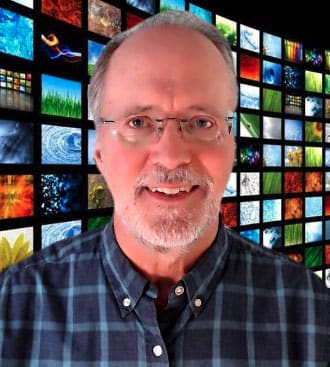
Craig Leddy is a leading authority, writer, industry educator and historian about cable, broadband, and streaming. Following a long career as a business journalist, Leddy founded consultancy Interactive TV Works, Inc. He produces and hosts the Interactive Case Competition, which has mentored more than 500 business students. He has taught Industry 101 and advanced courses for more than 7,000 media professionals. In 2020, Leddy was inducted into Cable TV Pioneers and in 2025 he was awarded the Cablefax Voices of Impact Educator Award.
Leddy’s book, Fast Forward: The Birth of Video Streaming, Media’s Wild Child, is available through all major booksellers. To learn more, visit his author page at
www.interactivetvworks.com/fastforwardbook.