

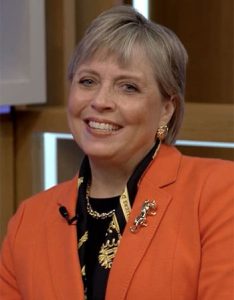
Interview Date: December 5, 2025
Interviewer: Stewart Schley
Series: Women In Cable Archive
Abstract
Sandra Howe, Independent Director, ATX Networks, describes an “accidental” entry into cable technology in the early 1990s, pivoting from an intended path in fashion merchandising/education into technical sales after advice from her aerospace-engineer father to “know it better than any man in the room.” A neighbor who was a VP of engineering at a fiber-optics startup (Broadband Networks) recruited her, and she joined as roughly the 21st employee, learning by necessity to sell and design fiber networks, including mapping fiber distances/splits and delivering early multichannel fiber-optic transmitter solutions for campus/institutional deployments carrying voice, video, and data. She connects those early private-network builds to the industry’s shift toward HFC (hybrid fiber-coax) upgrades, explaining why operators invested in fiber to expand channel capacity and improve reliability, and noting how HFC’s upgrade path (electronics swaps rather than full rebuilds) has enabled continued bandwidth gains toward multi-gigabit service.
She then traces her move to Scientific Atlanta during the digital-video rollout era, supporting major operators (notably Time Warner Cable and Bright House) with the equipment that enabled interactive guides and expanded content capacity. Howe emphasizes that execution at scale—manufacturing constraints, allocation, supply chain, and reducing costly “truck rolls”—is what makes cable technology commercially viable, and she highlights the increasing role of telemetry and analytics (including AI) for proactive network management. Throughout, she frames career success around relationships, curiosity, and continuous study (leveraging mentorship from CTOs and technical leaders), and she ties her later leadership to board service where she blends technology, operations, and go-to-market strategy to help teams “see around corners” amid industry change and consolidation. She closes by advocating mentorship—especially bringing more women into technology—and by underscoring “fearless” learning: leaning into discomfort, asking questions, and building reputation by showing up when things break.
Interview Transcript
STEWART SCHLEY: Greetings and welcome to the Hauser Oral History series presented and maintained by the Syndeo Institute at The Cable Center. Brisk day, December 2025, in Stamford, Connecticut. And I have the privilege and pleasure of spending the next 50 minutes or so visiting with an individual whose career, whose CV, and whose resume reads almost like a road map of the modern cable telecommunications progression on the technology side. Sandy Howe, it’s lovely to be here with you.
SANDY HOWE: Well, thank you. It’s a little cold for me.
SCHLEY: Yeah. Well, you’re a North Carolina person, so you got to make the adjustments. We have so much to talk about. And I really meant that. That when I look at what you’ve done with technology companies, today serving on boards of directors of companies but also having worked with some of the prominent tech suppliers in this industry, you’ve sort of been in the room where it all happened. You’ve seen a lot of progress in this industry. So let’s just start at the start. You’re a proud Nittany Lion. You graduate from Penn State I think early ’90s, ’93. Somehow you get a job in this unfamiliar terrain known as cable television technology. How?
HOWE: Well, I first thought I was going to go into fashion merchandising.
SCHLEY: Of course you did.
HOWE: And so I was an education degree major with a business minor and I actually got the job, and at Christmas in my senior year I went home and I said, “I don’t think I want the job.” And I did not know what I was going to do. And I was heartbroken because this is the path I thought I wanted my entire life, before I went to high school. Or college. And I ended up going, “What am I going to do?” My father looked at me and said, “Listen, you have been selling us for years. I think you should go into sales. But you need to go into technical sales. And know it better than any man in the room.”
SCHLEY: Interesting quote. Know it better than any man in the room. Your father was a tech guy.
HOWE: Yes, aerospace engineer. From Penn State.
SCHLEY: So did that trigger the oh, I’ve got to go find a technical job then?
HOWE: It did. So I went back for my last semester and I started applying for every technical sales job company that came on the campus.
SCHLEY: Using your fashion merchandising pedigree as a way to try to get in the door? Hmm. Yeah.
HOWE: Yeah. It was a little challenging. American Greeting cards did hire me for sales. So I figured I had some technology companies. I was down in the interview process and they said, “Listen, go sell for a year and then come back to us.” And that’s when I moved in, to decide. My neighbor who was one of the vice presidents of engineering at Broadband Networks. And that’s how I came into cable.
SCHLEY: This is whimsy. This is sort of accidental, right?
HOWE: Very accidental.
SCHLEY: This person got to know you and ultimately hired you?
HOWE: Yes. American Greeting cards sent everything in by mail and they went to his house because I was traveling. And he was kind enough to always carry it in and he realized I was getting a lot of things sent in. And he said, “You must be pretty good at what you’re doing.” And I said, “Well, I’m the top producer in my region.” And he said, “Well, I would like you to come and talk to us. We’re looking for a salesperson.”
SCHLEY: And at this point, Sandy, your tech knowledge was limited, I presume.
HOWE: Very limited.
SCHLEY: What attracted you to take the leap originally?
HOWE: Well, I went through learning the technology. He introduced me to what I would have to do at the company. It was a start-up in fiber optics and I came in as the twenty-first employee. And I remember calling my mother when they offered me the job and I said, “What am I going to do? This small company. I’ll be the twenty-first employee. They just offered me a job. But they’re in fiber optics. And they’re building these networks.” And my mother said, “Why are you on the phone with me? You need to tell them yes and get into technical sales. And even if this company makes it nine months you have technical sales on your resume and you will go get hired elsewhere.” And we sold that company after four years of working there. So it successfully grew. We had over 200 employees by the time we sold.
SCHLEY: And tell me again about your product line or what that company did.
HOWE: So it was very specialized. We had some of the first fiber-optic transmitters that were multichannel. We knew we couldn’t compete with General Instruments at the time. And so we were doing very specialized networks on campuses. Delivering voice, video, and data.
SCHLEY: You were really ahead of what was to come on the consumer residential side.
HOWE: Very. Yes.
SCHLEY: Did you begin to learn to speak the language, to be smarter than the other men in the room, to know more than your colleagues?
HOWE: Well, when you start at a small company you have to do every role. And part of my first job was that I not only had to go out and get customers interested in buying our product and solution. I had to then design the network and the bill of material and put the whole mapping together to sell it. To make sure it would work. And I did get known that my designs always worked. I fortunately did not have any not work.
SCHLEY: The topology. What is the design? You’re mapping out where the fiber runs go? Where they terminate? Where the signal proceeds from there?
HOWE: The distance of the fiber runs. How much we could get down that fiber. How we could divide it and split it.
SCHLEY: It’s interesting, Sandy, that you say your first customers were basically private networks, campus networks, institutional networks. When did the cable guys come into the picture for you?
HOWE: So the cable guys were doing some of these private networks because we had universal service funds that schools were receiving.
SCHLEY: Okay. And you got to sort of begin to socialize or begin to understand that world.
HOWE: And think about it. If they could put in these private networks that produced a significant amount of revenue it helped pay for them to further deploy HFC networks for subscribers.
SCHLEY: So key acronym. For those not familiar, HFC.
HOWE: So hybrid fiber-coax. And it’s the networks we still have today.
SCHLEY: The promise was that you could greatly increase the bandwidth that would flow through a cable system and the fidelity and the reliability. And at that time, this is ’93, ’94, ’95 ish, that was starting to be a hot thing in cable.
HOWE: Yes.
SCHLEY: Why were cable operators investing in fiber?
HOWE: Well, you could get multichannel capability. And that was the really big differentiator. And as we had all these programmers creating new content, you think about Turner Networks. They needed more space, more channels. We had to get it to the consumers.
SCHLEY: There was this reliability and signal quality dimension too, right? Because in the olden days so many amplifier stream coaxial cables if you’re at the end of the line the picture wasn’t ideal. Right?
HOWE: Well, so think about it too. I started in fiber optics. Fiber is on or off. And that’s one thing we are going to be dealing with today with fiber to the home. It either works or it doesn’t. HFC networks, you have the coax that can be giving. And sometimes there could be problems on the network and it is with an amplifier, and you still are getting your signal. It just might not be as clear of a picture. Or your high-speed data is slowed down a little. Or that’s when you see the macroblocking.
SCHLEY: And you would know. For instance you’re an independent director with the company ATX Networks which is deep into this world. Do you believe the fiber all the way to the home promise is going to indeed happen?
HOWE: So I believe our networks and I always put on my business hat, we are in, the cable industry has had a great opportunity with HFC. It is the gift that keeps on giving. When we first put it in and we were doing — my first networks were 550 megahertz. We’re now at 1.2 to 1.8 gigahertz. And think about everything that we can put down that pipe. We have not had to change out our physical network. We’ve just changed out electronics and we’ve been able to do it. So for our shareholders it’s been a great story because you can upgrade an area for a very low cost versus building all fiber. Now putting on my fiber engineering hat from when I first started in the industry, if I could put fiber everywhere I would. It’s easy. It’s resilient. Nevertheless, with our business models it’s amazing what we can do. We’re going to be getting 10 gigabits to the home.
SCHLEY: Through an HFC architecture.
HOWE: Through HFC. And there’s discussions going on right now in standard bodies with CableLabs and DOCSIS that we could do beyond that.
SCHLEY: I can tell you get sort of animated talking about the possibilities in the tech. Was it fun for you immersing yourself in this world of sales engineering? Did you enjoy the Xs and Os and the ones and zeros and the actual design and topology part of the job?
HOWE: I probably liked one, the people. Was probably –
SCHLEY: I knew you were going to say that.
HOWE: Really. And I also liked the building factor, right. So we were building these really advanced networks.
SCHLEY: Physically constructing these machines basically. What was the progression after Broadband Networks for you?
HOWE: So I stayed a year after we sold and I decided I wanted to go work for one of the largest companies I’d been reading about. And it just happened that I was in the airport and I was beside somebody that had worked for Scientific Atlanta that lived in State College, Pennsylvania. And I was reading Multichannel News and they said, “Could I have that when you’re done?” I said, “I don’t think you’d be very interested in this reading material. It’s industry-specific.” And they said, “Oh, no. I am. I get that. I work for Scientific Atlanta.” And then I went, ding, “Tell me more.” And I went and started interviewing. It was when we were just getting ready to launch digital video everywhere.
SCHLEY: And you were offered a job.
HOWE: I got the job.
SCHLEY: And you took it.
HOWE: And I was very fortunate to get to go to the Carolinas to work for rolling out high-speed — or digital video with Time Warner Cable.
SCHLEY: What made digital video important in that era?
HOWE: Once we had it digitalized we could put so much more content to the home. And give a really good user interface. And then we actually even got to the ability for the pay-per-view to work over video. And it grew from there because once we got two-way then we thought about high-speed data.
SCHLEY: From an equipment vendor’s perspective, Scientific Atlanta’s perspective, you guys supplied basically all the componentry, all the way to the set-top box. Correct? To make digital happen.
HOWE: Yes.
SCHLEY: But it was expensive. There was a lot of money put into this conversion. Right? It was good for the vendors. It was good for you and your company.
HOWE: Well, it was good for everyone because it was a game changer for the operators and what they were offering. Just the experience. Having the guide. The really nice guides. That were interactive.
SCHLEY: People don’t remember what old grid style guides used to be like on cable. They were not handsome and they were clumsy. And digital really did change the customer experience entirely. You supported mainly the company Time Warner Cable in this job?
HOWE: Yes. And Bright House Networks.
SCHLEY: And they were one of the cable companies in the midst of this big conversion.
HOWE: Yes.
SCHLEY: How did that role, Sandy, expand your technology or your understanding of the industry itself and the gear works that made it all work?
HOWE: Well, I started as an account manager and I did take one of the worst-performing accounts that they had. My two states had only done $9 million in revenue. And in the first year I joined I turned that into $32 million. So I got a little bit –
SCHLEY: Rookie of the year I think you were.
HOWE: Yes. The company knew about me at that point, within Scientific Atlanta, which was very big.
SCHLEY: I get that companies were investing money to do these massive upgrades. But what made them want to work with Sandy Howe do you think?
HOWE: I didn’t know at the time because again I was so young still right out of college. And this product got so popular. We went into allocation. We couldn’t get enough parts. Once we had enough parts we couldn’t make it fast enough. And it was always working with the customer on what we needed to deliver. And I would have to work a lot internally to understand what was coming in partwise to make what we could manufacture. How fast we could get it into the US. And with it I never realized the people that I worked with I enjoyed working with internally in the company. And my boss told me, “People like working with you because you’re nice to them.”
SCHLEY: Go figure.
HOWE: I was like, “Isn’t everybody nice to them?”
SCHLEY: The answer is no by the way.
HOWE: That’s what I learned, is no. And then I thought well, gee, that’s not really hard to do. And it was also following advice my mother always taught me, which was treat others the way you want to be treated. And acknowledge them.
SCHLEY: The machinery is one thing. You guys had to make outstanding products. The attention to detail was intense. The inventory management was difficult. But there were more than one supplier. People could have done business with someone else. The relationship side of this industry has always mattered. The customer relationships and your human relationships.
This interview, Sandy, is part of a new Women’s Archive series for the Syndeo Institute and the oral history series at large. So I want to ask you alluding back to that comment your father made long ago. Make sure you know more than any man in the room. Often there were a lot of men in the room and particularly in the technical side of the trade. So I just would love to hear your thoughts about being part of that community. Did you feel tension or opportunity? And how did that resonate with you? It’s the gender question.
HOWE: Well, I think our industry, what I love about being in technology is technology is always changing. So once you learn the foundation, once you understand what HFC is, how it works, you know your foundation and then it’s on you to keep up and to always keep growing and learning what’s coming. Today I spend my time studying. And I’ve worked as an adviser for an AI company. I’m working and looking into quantum and what companies need to be doing to prepare for quantum computing. I am always curious. And you’ve got to keep, and it goes back to my days in college of how I got through, was to keep studying.
SCHLEY: How you learn. Right. How do you learn? Are you relying on face-to-face conversations with compatriots? Are you reading technical manuals? What advice would you give to someone who wants to be a Sandy Howe?
HOWE: I am a prolific reader. I was telling my husband how many different periodicals, journals I read almost every day. And he was blown away. Because of course this is the nature of business too. It’s technology but it’s business. So I read a lot of business as well as technology. And then I will tell you when I have questions, again through all these great friendships I have I’ve always been really close to the different chief technology officers at the companies that I’ve worked at and with. And so when I have questions I ask them. I go and say, “Explain this to me. Why would I want to do this this way? What else should we be thinking about?”
SCHLEY: Who in this industry has been good at answering those questions for you? You can name names. Who would you point to?
HOWE: I’m so fortunate. Early in my career I got to work with Mike LaJoie, the CTO of Time Warner Cable. His team. Mike Hayashi. Louis Williamson. Kevin Leddy.
SCHLEY: All these pioneers in the advanced technology.
HOWE: Those were my buddies. So that was early on at Arris. Charles Cheevers, Tom Cloonan were just so key in being able to go. And I still go back to both of them at times and ask questions today.
SCHLEY: Traces back to the relationship building component. There’s been a bit of consolidation not only on the operating side of the cable industry but on the technology side of the cable industry. You mentioned Arris. There was this lineage. This progression. Help me with it. Scientific Atlanta to –
HOWE: Cisco.
SCHLEY: Cisco. You were part of that though.
HOWE: Yes. At Scientific Atlanta I’ve had so many different jobs. Every time I think they figured out once I got a job down pat and I was going to be able to be in the easy lane for a minute they promoted me and moved me to something else. All the same time they kept me completely in parallel working with Time Warner Cable, which was the largest customer for the company and it was 27 percent of their revenue.
SCHLEY: It’s interesting. For those unfamiliar, there really was a stride-by-stride lockstep partnership sometimes between a customer but also your company. In some ways I think you sort of were all kind of doing the same thing.
HOWE: Living on the coast, I’ve been a big sailor. I sailed some when I was a child. But I got lots of opportunity living on the coast. My biggest thing, when I think about the relationship the companies had and we still even have in the industry, is all boats rise with the rising tide. And so if we could figure out when we started looking at time-shifted TV, we could figure out how to do this, the business case around it, and we would literally work on these things together. So you didn’t just need the technology. You needed the business side. And then even to figure out what would the consumer pay.
SCHLEY: I think those sorts of relationships permeate other fields. I don’t know. Banking, airlines, transportation. But cable had a certain camaraderie I think that was maybe unique. Do you agree with that?
HOWE: I’m really thrilled to be part of an industry that was all about connection. If you think about it, we connected the networks. We built these networks that do 10 gigabits of broadband today and that are completely changing to us using the cloud in everything we’re connecting to them, and how many devices are in the home today that are wireless. But it’s also the people side of that. That same network allows us to keep connected to all these people. And to stay connected. So it’s all about connections.
SCHLEY: Speaking of which, you’ve been very engaged and active as a mentor to younger people. And I think your ambition is to bring talent into an industry you care about. Is that a fair way to phrase it?
HOWE: Yes. And first of all everyone knows I want more women in technology. So it’s not so lonely.
SCHLEY: So it’s not so lonely. I get it.
HOWE: And then I’m really big right now — one thing that’s really top of mind for me is almost 8 percent of college grads are having difficulties finding jobs. And so I really spend a lot of time mentoring, and I’ve mentored engineers as well as young marketeers, and trying to help them find the opportunities to grow and hopefully bring them into the industry.
SCHLEY: Your field of contacts is so rich that you’re a terrific bridge and resource for somebody to have. What is the appeal for a young technologist or a young businessperson to work in this industry that I’m still going to call “cable” for the moment? Why? What would be the attraction?
HOWE: That’s what drives me crazy because we have to market ourselves a little better about what we do. If it wasn’t for the private investment that the cable operators made building these HFC networks we would still be dialing up. And what I don’t believe, and then when you think about the companies that are pushing even with AI today, we’re always thinking about what’s next and trying to stay ahead technically. More than people realize. Because they do think about us. About what they see in their home.
SCHLEY: It’s a perception that’s tricky to manage sometimes I think. But the dependence on these networks is vast and it’s every day and it touches us all. Take me back to the moment when you first — maybe the lightbulb went off around cable modems and the high-speed Internet opportunity. Do you remember where you were and what you were doing?
HOWE: I was still at Scientific Atlanta. Scientific Atlanta said, “Let’s figure out how to get into modems.” We were late to the game. There were tons of modem providers by then.
SCHLEY: Later in the ’90s would you say?
HOWE: Yes. And we were trying to figure out how to come in and break into the market.
SCHLEY: You saw something happening. It was hot by this point.
HOWE: Yes. Yes. And so that’s when we started the business development function in the company. And that was somebody reporting in to me. And I will tell you when I started business development I thought it was so hard. Because you had to think about what was coming. And you had to help guide it there for a period out.
SCHLEY: And at some point you have to make a bet. You have to roll the dice a little bit. But did you have a sense just as a user, a consumer, when you went from a dial-up Internet experience to whoa, you sort of knew this was going to be a game changer?
HOWE: Yeah.
SCHLEY: You talk about having to make a forward-thinking decision. What I always thought about cable especially and it’s not universally appreciated is it has to work at scale. You’ve been around amazing engineers who can make a lot of cool stuff happen in the laboratory environment but scale was always paramount. Right?
HOWE: Yes.
SCHLEY: Why?
HOWE: Well, you have to have the operational efficiencies. It has to operate well. These truck rolls today cost so much money. So anything we can do, like we’re doing today with the amplifiers putting in the telemetry, putting in the transponders so they’re going to talk back and phone home and tell us how they’re doing, and then we can apply AI and big data to that and look and say when a fiber-optic transmitter drifts one dBm we’re starting to see them fail within the next 90 days, so we could do proactive plant management.
SCHLEY: So you have knowledge.
HOWE: And know where to go.
SCHLEY: So you do speak tech. Just rattled that off nicely. You mentioned some of the Time Warner crew. Mr. Leddy, Hayashi, Louis Williamson, and others. Who else has been particularly meaningful in your career in cable?
HOWE: I’ll tell you. Bob Stanzione and Ron Coppock and the Arris team. Arris. Again I went in. I was brought in because they wanted to get into video. And through my work in the advanced technology team we acquired Motorola Home from Google.
SCHLEY: We forget this period of history where it was briefly owned by Google.
HOWE: And it was a big, big transaction. We were not even a $1 billion company, or right at $1 billion, buying a $2.1 billion company. And I remember with Bob when we were talking he’s like, “We really need to figure this out. We need to get this integration right.” He did a great job on the integration. And after the first year we turned it, the $1 billion plus the $2 billion into $4 billion. So I think our shareholders were pretty happy.
SCHLEY: I think you did okay. Speaking of shareholders you do serve on a couple of boards of directors. That’s different from doing day-to-day business development or engineering and sales work. What do you like about being on a board?
HOWE: So being on a board it is the culmination of everything I’ve done. So it is bringing together all that technology background that I stay very current on, and it’s bringing in the operations and knowing and thinking through what’s going to happen as we bring this new technology for the companies that I serve or the new solutions to market. And then it’s also adding that go to market. Thinking through that part of it. And then helping the executives and the operating team see around the corners. So asking the questions to help them execute better.
SCHLEY: Yeah. It really plays on the strategic thinking part of your mind. Speaking of — we’ve talked about this a couple times about what’s around the corner. What’s around the corner?
HOWE: Well, we’re going through lots of change. And my favorite quote is a pessimist expects the wind to not change. An optimist thinks the wind will change. But a realist adjusts the sails. And I believe we’re going to see a lot of M&A activity coming up. We’re already seeing it. Today was the big Discovery Netflix deal. And –
SCHLEY: News happens. Yeah.
HOWE: We have a lot going on from the operator side and I believe there’s going to be an extreme amount of activity from the technology side that follows.
SCHLEY: And then what about, Sandy, from the consumer or the user side? Who knows? But there’s some confluence of, I don’t know, AI and holograms or connected mind transplant, I mean what’s out there that excites you about what we might be inventing as a human civilization?
HOWE: Well, I think the number one thing we’re going to have to do as we’re going through all this change is keep that customer at top of mind. And that experience and the customer satisfaction. That’s one thing every operator I speak with right now is thinking about. And that’s where I love where the technology can help. Because as we start collecting all the data coming in from the network, from the devices, and then we start putting all the back end big data machine-to-machine learning together.
SCHLEY: We know more. We know more than we used to know. I love that that’s the analogy I guess. The North Star is always going to be the customer and the customer relationship.
HOWE: Yeah.
SCHLEY: Sandy, you’ve been active in supporting organizations such as Women in Cable and Telecommunications. And as a mentor obviously for people at an individual level. What do you find rewarding about that kind of work?
HOWE: So I’m all about we have to bring more people along. Especially I want more women to take the risk and the leap like I did when I started as the twenty-first employee of a company that I barely knew what fiber optics were. It’s my job to help bring more people along. And I’m very passionate about developing young talent. I think there’s just so much that they can do.
SCHLEY: Do you stay in touch with your mentees as they progress through their careers and whatnot?
HOWE: Yes. Yes.
SCHLEY: It’s got to be fun. It’s got to be enriching.
HOWE: It is. It’s so fun when they call and say, “I’ve gotten a promotion.”
SCHLEY: Fantastic.
HOWE: “Should I take it?”
SCHLEY: Do you have any words of wisdom or learned advice for modern-day Sandy Howes in 1993 in terms of — you mentioned curiosity as a big attribute. But this is a changing landscape. AI has such a huge uncertain impact on the world of business and professional careers. What would you tell — what do you tell a mentee who comes to you with questions like that?
HOWE: The WICT Network has their touchstones of leadership. And one of them is being fearless. And I used to always read the touchstones and think I had to work on other things. And then I saw the fearless one. And I was now I just believe that is such a key to success, is being fearless, and with it that curiosity. Just keep asking questions. And when you don’t know figure out who might know that can help you.
SCHLEY: Because sometimes fear makes us want to just back away from the problem but sometimes fear is trying to tell us something that maybe we need to learn something or do something different. Right?
HOWE: Yeah.
SCHLEY: My words, not yours, but it sounds like you’re nodding in agreement.
HOWE: Well, and I think it’s when you feel that little bit of uncomfortable that you’re actually going to grow the most. And it’s been typically after the times I’ve done that that I’ve gotten that next promotion. Moved on to the next job.
SCHLEY: There’s also a piece of your pedigree. And this has come through in some of the bios and articles that have been written about you. You were once labeled the flawless follow-upper or follower-upper. And sometimes the follow-up has to come when something has gone wrong. You may have an outage like you said earlier, a breakdown of equipment. How have you dealt with those tensions, if you will?
HOWE: I think, one, everyone that I work with knows I write everything down. And if I’ve written it down I’m going to get it done and fixed for you. And it’s going through those times of trouble. That is one thing my boss at Scientific Atlanta Joe Quane always taught me. He said, “You earn your stripes. It’s easy for your customers to like you when everything’s working but when it’s not working that’s when you build the most of your reputation.”
SCHLEY: And that’s where I think that fearless quality comes through because you can’t not make that phone call. You can’t not be there to solve this problem or whatever.
HOWE: Yeah.
SCHLEY: This has been an engaging conversation, Sandy. Like I said at the outset, I love that we use you as a lens and a window on the progression of really an amazing story, an amazing industry, and your contribution to it has been profound. So thank you for spending time with us this afternoon in brisk Stamford, Connecticut. Thank you for watching. And on behalf of Syndeo Institute at The Cable Center, I’m Stewart Schley. We’ll see you soon.