

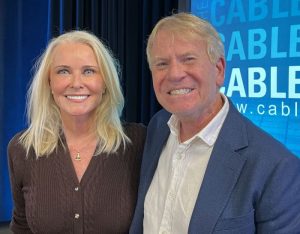
Interview Date: February 20, 2026
Interviewer: Stewart Schley
Series: Women In Cable Archive
Abstract
Gemma Toner’s oral history traces an unconventional career that began in public accounting before she moved into local cable advertising and then joined AMC during the cable-network boom of the late 1980s. Her willingness to take risks and pursue unfamiliar opportunities led her from marketing and distribution into new-media development and eventually to Cablevision, whose highly entrepreneurial culture encouraged experimentation. There, Toner helped introduce and market groundbreaking services such as Optimum Online, Optimum Wi-Fi, Optimum Voice, and the “Triple Play” bundle of television, broadband, and telephone service. She emphasizes that these innovations required constant consumer education, close collaboration among engineering, operations, customer service, product, and marketing teams, and a willingness to test imperfect ideas and learn from failure. Later, she led Cablevision’s data strategy and analytics efforts, using anonymized set-top-box information to improve network operations, understand viewing behavior, and develop interactive advertising products.
Toner retired from Cablevision at age fifty following the death of a close friend, an experience that prompted her to reconsider the personal sacrifices associated with an intense corporate career and reconnect with her family and broader sense of purpose. After becoming involved in philanthropic work, she founded TONE Networks when she recognized that many employees lacked access to the mentors, sponsors, and executive coaches who had helped her succeed. TONE was designed to democratize those resources through short, video-based leadership lessons and has grown into a business serving companies and nonprofit organizations through a network of expert contributors. Throughout the interview, Toner presents curiosity, resilience, humility, trust, relationship-building, and service to others as central career principles. Her advice is to begin before everything is perfect, accept lateral moves, learn from mistakes, support other women, remain grounded in one’s roots, and preserve human connection even as technology transforms the workplace.
Interview Transcript
STEWART SCHLEY: Greetings and thank you for joining us for what I think is going to be a pretty cool episode of the Hauser Oral History Series presented by Syndeo Institute at the Cable Center. True story, when you were a journalist covering the cable industry during the heyday, the company everybody wanted to profile and to write about was a company based in Long Island, New York called Cablevision Systems Corporation. Gemma Toner was a senior media and product development executive at Cablevision. Gemma was, as they say, in the room where it all happened, so the chance to talk to you for an hour or so is absolutely a delight. Welcome.
GEMMA TONER: I am so happy to be here. And I love telling the stories. It was an extraordinary place to work.
SCHLEY: It just was not your father’s cable company. It was an interesting place.
TONER: It really was wildly — yeah, wildly entrepreneurial, and visionary, and very exciting.
SCHLEY: How did you get there? You had a job with a predecessor, related company, called AMC Networks. Tell me about AMC Networks.
TONER: Right, right. So my background was I actually started in public accounting, right. And, why? Because I could, and I could get a job, and it was a good living, so I thought — unfortunately I got into it and realized pretty soon after that it really wasn’t for me. And that one of my clients at the time happened to be this company called Time Inc., that was a media company as well, and I really got the bug when it came to media. So then the challenge was, as someone was a finance and accountant type, who would hire me in the media space. Actually, a little known fact was I actually started out in cable ad sales for, like, a millisecond. Because truly they were the only people that would hire me. And this was back in 1987 or so.
SCHLEY: This was an entry point.
TONER: It was an entry point. It was, you know, we were selling ads when there were no ratings, when nobody knew anything, so it was really selling air.
SCHLEY: Gemma, just to clarify. You were selling local advertising.
TONER: I was like knocking on doors, talking to car dealers, that kind of stuff. So it was going from, in public accounting, it was a very corporate, you’re sitting in the CFO’s office, to oh my gosh, look what I’m doing now, I’m knocking on doors and —
SCHLEY: Feet on the street.
TONER: — yeah, exactly. That happened for just a couple of months. And then I was able to — you know they always say, “When you get in, what do you do with it?” And so I was able to actually meet a woman who was president of AMC at the time. And she and I spoke, and she gave me a call one day and said, “Hey, I’ve got a job for you,” and I started at AMC. And that timing was really in the heyday of cable networks.
SCHLEY: This is late ‘80s, right. Late 1980’s.
TONER: Yeah, late ‘80s. And it was so much fun.
SCHLEY: And AMC originally was one channel. It was called American Movie Classics, but you guys spawned into multiple —
TONER: Yes.
SCHLEY: — national networks and regional networks.
TONER: Yes. We had Bravo, we had Independent Film, we had all the regional sports networks. And we just had — the joke at — it was then called Rainbow, was — I have a logo, I have a network, right. So we would get an idea, and we’d say, “Okay, we’ve got the content, let’s get the logo, and let’s go.” And it really was, networks were just popping up all over the place. It was kind of the network bonanza.
SCHLEY: Why were they popping up all over the place? What were the conditions?
TONER: You had this nifty thing called cable, right. And there weren’t that many other sources of entertainment. There were just all these unique opportunities for cable operators who were looking to drive penetration, to also add more content. You know, that was the —
SCHLEY: The capacities were expanding, right.
TONER: The capacity was expanding, the cable operators wanted to take those rates up, and they wanted to give their — I was going to say give their employees — they wanted to give their customers some added value. And so that’s where all of these new networks come up, and tiering, and all of that stuff started to happen.
SCHLEY: And when you joined AMC around ‘87, did you already have this stable of all these — was Independent Film in existence?
TONER: No. We launched IFC, we launched what started as Romance Classics, which was a network for women that turned into We, and a variety of other ones that I can’t even remember. One of the networks that we launched was a broadband network; this was later on. It was one of the colossal fails in my career. It was called American Pop. And it was again a concept, it was all kitsch, and it was animated. And it was animated in film clips. Our goal at American Pop was to create content for this fledgling business called broadband.
SCHLEY: Called the internet.
TONER: Yeah, the internet.
SCHLEY: The video streaming — streaming deal —
TONER: That internet thing, right.
SCHLEY: Wow.
TONER: So the colossal fail on that is we were making what felt like really short form content back then. This was back in 1999. Which was probably like thirty-minute content, which was just way too long, way too early. But it was an exciting product to work on.
SCHLEY: It was emblematic though of the vibe of that company. You worked in new media development.
TONER: Yeah.
SCHLEY: Besides American Pop, what else did you work on?
TONER: It was pretty much how could we add value and make money knowing what cable operators were looking to do. So to really understand what our buyers were interested in. The market was much less complex back then, and so it was really anything that we knew they had this new product that they were looking to figure out how to market, which was called broadband, high-speed internet, and so we just launched a whole bunch of different trials. American Pop was the one that I worked on most specifically. And then this was still when people were launching websites and e-comm. I mean —
SCHLEY: Nobody knew. Nobody knew.
TONER: — this was still early in just web development in general.
SCHLEY: And per my intro, AMC Networks was owned by a cable company.
TONER: Yes.
SCHLEY: Called?
TONER: Called Cablevision.
SCHLEY: Called Cablevision. What advantage synergistically was there in having a cable operating company launch cable channels?
TONER: Yeah. Sometimes it worked, sometimes it didn’t. It was great to have in the backyard a cable company where you could really lock in on what are the challenges. But that didn’t always mean we were going to get distribution; we really had to earn our way. So I would say that was what was probably the most synergistic at that point.
SCHLEY: And Gemma, I would invite you to talk about that distribution because the economic model was, as a channel offeror, you needed to get paid a license fee by your cable brethren.
TONER: That’s right.
SCHLEY: It wasn’t easy.
TONER: No. It wasn’t easy. That was the game. It was subscription based, based on the subscribers. And you always wanted to go for that basic cable, which was the lowest level.
SCHLEY: Because it had wide —
TONER: It had the most distribution.
SCHLEY: — presence.
TONER: The most eyeballs. So if you were ad-supported, which not all of our networks were, that was really important.
SCHLEY: When American Movie Classics, later AMC, originated, was it an advertiser supported channel?
TONER: No. We were — that was part of our pitch, we were not.
SCHLEY: No commercials.
TONER: We were commercial free. We were just the classics, the way they were meant to be seen.
SCHLEY: And how did you get — how did you make money then?
TONER: We made money on those subscriptions, on those license fees. That was it.
SCHLEY: I think AMC was not as high-priced as a HBO-style premium service?
TONER: Oh God no. Yeah. No, no. It was definitely more along the other basic channels. Not like the sports channels, which always had a much higher premium. But we were kind of in the same field as a TNT, and MTV, and all those. Those would have been competitors, if you will.
SCHLEY: From your comment, I take it you are, or were, a film lover?
TONER: Yes. Yes. I love all sorts of film. I love all sorts of media. And so it was great. It was so much fun to work at a company that was really holding up the Golden Age of Hollywood, which was what we were doing. That’s how we started.
SCHLEY: That was the premise and the mantra of AMC.
TONER: Yeah. And obviously things change and morphed, but in the early days that’s what it was. It was truly classic films. So we got to work with celebrities that, you know, they’ve all passed away. Whether it was — oh my gosh, I’m trying to think of some of the ones — Dorothy Lamour to Douglas Fairbanks Jr. to just extraordinary — Shirley Jones. I’m trying to think though. There were just so many fabulous — Debbie Reynolds.
SCHLEY: Debbie Reynolds. Who didn’t love Debbie Reynolds?
TONER: Oh yeah. She was really — she was incredibly hardworking.
SCHLEY: Really?
TONER: Yeah. Very hardworking.
SCHLEY: What was television like when you were a kiddo? And where were you, where did you grow up?
TONER: Where did I grow up? Well, I kind of grew up in two places. My parents immigrated — and I’m actually an immigrant — from Northern Ireland. We grew up in New York and then I also grew up, my summers in Ireland. I had a very different TV experience. (laughs) Growing up in New York, eventually you had Cablevision, and I guess it would have been Warner Cable at the time, so you had choices.
SCHLEY: So you did have cable. You were a cable kiddo?
TONER: I do remember the days of only having a couple of networks. Then I would say in my early — mid-teens, I guess — that’s when I remember getting cable, and MTV of course being just the bomb.
SCHLEY: Breakthrough stuff.
TONER: Yes. Just extraordinary, right. And the different sorts of cable boxes, the clicker box that was really noisy, and you just kind of, shimmying it down to get to that next level of channels.
SCHLEY: Good times. Yeah.
TONER: But then growing up and spending summers over in Ireland, you had a very different situation. There you had literally three channels with very limited programming.
SCHLEY: All over the air? Over the air television?
TONER: Yeah.
SCHLEY: Yeah. Your title is so interesting, Senior Vice President New Media Development. Did you have pretty wide latitude to —
TONER: I did.
SCHLEY: — sit in your office and think things out or what?
TONER: I was really fortunate. I came up the ranks through marketing and distribution. And then sort of my last role — and it was sort of kind of what I was known for was give me a blank piece of paper and let’s figure it out. And so, we were trying to figure out this thing called new media. Which today is digital, right.
SCHLEY: Absolutely.
TONER: So back in the old days it was new. And so, it was like, how do we live in it, how do we leverage our brands. And this was so early, super early.
SCHLEY: And I’m not sure it’s fully understood by the younger generation today, but today you and I could put a channel together in a couple of days. We have iPhones, we have access to YouTube, we can get our stuff out there. In the day, cable was really the only meaningful conduit for some of these new ideas. And then you segued into the broadband arena.
TONER: Right. And then you were bouncing it off a satellite. It wasn’t like you could just say okay, I’m going to whip this up and put it out there.
SCHLEY: Took money. It took time.
TONER: It took major money. And it took licensing and you know — especially the type of content that we were doing, you had to be working with the studios, and things like that.
SCHLEY: Gemma, did you ever have an idea that just got poo-pooed or shut down? Like, what was your worst idea for new — for media invention? (laughter)
TONER: For new stuff? I don’t know that I —
SCHLEY: They were all good ideas.
TONER: Yeah. I think my worst ideas probably came in greenlighting some marketing campaigns when I got to Cablevision. Because I certainly had a lot of clunkers there. But I think that’s what’s important for people to know also is that as you go through your career, we’re talking about all the highlights, right, but there’s a lot of failures that are there that everyone should know. I think it’s something that people don’t talk that much about failures. That’s why I started with my colossal fail of American Pop because it was. (laughs) But it was a lot of fun and learned a lot. And for me personally, that set me up because that sort of put me in a place where wow, she knows broadband. Then I ended up moving over to a cable company, which was not a typical move for someone that was coming on the content side.
SCHLEY: No. Not at all. And broadband began to become prominent in the cable industry around, really, mid-‘90s and then later into the 1990s. You had used the internet most of your life. I presume you knew how to email, you knew how to —
TONER: I was a geek. I loved —
SCHLEY: Okay, you were a geek.
TONER: I loved pushing buttons.
SCHLEY: What was it about broadband that just, poof, changed everything?
TONER: I mean, what was extraordinary was what it was capable of. So the challenge was here we were as cable operators sitting on these systems that had all of this capacity. And now the challenge, and why Jim hired me, was — Jim Dolan — was we needed to convince people that they needed this because it had never been done before.
SCHLEY: Isn’t that crazy?
TONER: Yeah. It’s hard to imagine. But we would literally do consumer research about — and at the time, AOL was in its heyday, everyone had AOL.
SCHLEY: The squeaking modem.
TONER: It was in movies —
SCHLEY: The tedious slow experience.
TONER: — oh, they loved that, right. And literally we would ask, “Well, what if you could have internet that was constantly on? And what if you could watch movies?” People just couldn’t get it. They could not get that concept at all.
SCHLEY: It was mind blowing. What are you talking about?
TONER: And they would make excuses, like, “No, I really, really like when my modem makes that sounds because it allows me to go up and get a drink.” You know, they’d worked into their lives this experience that was just so subpar to what we could deliver.
SCHLEY: Absolutely. You moved on to Cablevision. Cablevision was a different animal. Your company had higher — we called it ARPU, Monthly Revenue per Customer — you were out in the front in the early evolution of a lot of products. What was the juice behind the entrepreneurial spirit of that company?
TONER: Yeah. I think it started from the top, from, like, Charles Dolan and Jim Dolan. It was just go, go, go. It was fearless. And it was the sort of company that it was exciting and you were rewarded for doing something that hadn’t been done before. And you were also kind of rewarded for doing the impossible. Because that was often times the order we would get. It hasn’t been done before and, “Oh, and by the way –”
SCHLEY: It’s probably not going to work.
TONER: Right. It may not work. You don’t have a huge budget, and we need it done in a timeframe that is probably very unrealistic. But go for it.
SCHLEY: Yikes.
TONER: But that was pretty much you had to be okay with being asked to do the impossible, and then go back and make adjustments and dive in. And it was very much a figure-it-out kind of place.
SCHLEY: Was my prelude correct? You extracted, that’s probably the wrong word, more money per customer than most cable companies.
TONER: We did.
SCHLEY: Even before you joined Cablevision. How? What was the magic?
TONER: It was in the brilliance of packaging. And again, that was Chuck’s vision. How do you package these different products in a way to really up — yield that ARPU. The other thing that we did that companies hadn’t done was we actually branded it Optimum. And so that really set us up — unintentionally or intentionally, I’m not sure — for an Optimum suite of services, which then became Optimum Online and Optimum Voice and so on and so forth. And that was unusual. Most companies in that day had not branded it something else other than. Because it wasn’t sold —
SCHLEY: They just used the name of the company.
TONER: — right, it wasn’t sold as Cablevision, it was Optimum, you had the Optimum packages, Optimum Gold, Optimum Platinum.
SCHLEY: Yeah. And it worked to induce people to buy up to higher levels of service. They loved it.
TONER: They did. Yeah. People loved it.
SCHLEY: It wasn’t force fed. I was on an elevator once at a cable show and Charles “Chuck” Dolan steps in. And then all this man did was start Home Box Office [HBO] and was one of the absolute patriarchs of the industry.
TONER: He’s incredible.
SCHLEY: I didn’t know what to say. He was kind of a shy man, right.
TONER: Yeah. I mean, he was and he wasn’t. I think he was just so extraordinarily humble. He was a great storyteller. So I think sometimes his humility could have been perceived as shy. But I think it was just he was extraordinarily humble and just was always thinking. Always just had what’s next on his mind.
SCHLEY: Did you have — often, did you interact with Mr. Dolan and his son, Jim.
TONER: I did. And so, there’s nothing like it, having that kind of team behind you. Don’t get me wrong, the pressure was extraordinary. But when you work with people like Charles Dolan and Jim Dolan, they go in, and they go all in. So to have the budgets that I had, to build the team that I had, I was able to build, it really was — they had your back, and they were pushing you forward. While it was still the impossible, they were still funding you, and they were making a bet on you, and they were going to do whatever it took to make that bet pay off.
SCHLEY: It’s confidence-yielding, I guess, for you.
TONER: It is. It’s confidence, it’s exciting, it’s a little nerve-racking at times when you’re doing stuff that nobody’s done before, but, you know.
SCHLEY: Let’s talk — you launched a lot of products. Choose one. You talked a little bit about broadband. I’m fascinated by the consumer reaction to it. Did it take off immediately or was it a slow climb?
TONER: Oh lord no. It was a — no. We made a lot of mistakes. And one of the things that actually Jim pioneered and innovated was this idea of self-install. Now, self-install, who would want to self-install, right. And how in the world do you do it, right? And so, the early day — and the reason why he wanted self-install was he wanted to scale this business super-fast. And you have a gating factor in cable television; you had to roll trucks. And we didn’t want to roll trucks. Trucks were expensive and we wanted to grow faster than the ability to roll those trucks.
SCHLEY: That’s an ambitious —
TONER: So that was — it was big. Cablevision was known for its big ideas. So then it was like, how do we do that? It was really a technical product and marketing challenge. And what was so exciting was everyone was on board. We’d sit around, and we’d get the engineers, who would tell us, “Here’s how it works,” and literally we were sending self-install boxes with wrenches, and directions that were, like, four pages long. Which nobody wanted. It was so iterative and it was really a fail fast, fail forward. We had to get out there, get the feedback, and then pull it back in. Then another really innovative thing was the — Jim at the time had bought The Wiz, which was a chain of consumer electronic stores. So that was another way to fast scale this business. It’s like, just go into The Wiz. We had to figure out how you would do that. So just a lot of things that we had to figure out. There was packaging. I remember going over and doing focus groups of people, you know, giving them the modem to try to connect to a TV. And oh my God, it was just a disaster. But you learn a lot and then you figure it out.
SCHLEY: I love your story about the wrenches and the kits because —
TONER: Oh yeah, they were real.
SCHLEY: — let’s just level-set, a lot of people didn’t even have an ethernet connection or port on the back of their IBM PC that was sitting in the office. And in the olden days, I’ve heard cable companies say it would take two to three hours to connect a new high-speed internet customer. That does not scale.
TONER: Yeah. No, it doesn’t. And we knew that. And so, it took a lot of work with the engineers to figure out how can we do this. And it was pretty ugly. It was ugly and groundbreaking all at the same time. And then we really got it down. And it really became the model for scale.
SCHLEY: You had buy-in though from various departments, right. People —
TONER: We did.
SCHLEY: People believed.
TONER: Yeah. People really believed. They got really excited. At Cablevision, it was very entrepreneurial, it was a very high-pressure environment, but the people that it attracted were the people that really liked this zhuzh. They liked the adrenaline rush of, okay, how do we do this. It’s never been done before, all right, how do we go about it.
SCHLEY: Was it a job where you woke up, go to work — you were in Long Island?
TONER: Yeah.
SCHLEY: You were at the Long Island headquarters? Didn’t necessarily know what was going to be on your agenda that day?
TONER: Somedays. Yeah. Somedays if you walked past Jim’s office, you never knew what you were going to get, which was a new idea, “Hey, my dad wants to do this. Go chase this down.” So that did happen. But we were pretty focused. In order to do the kind of groundbreaking things we did, we had to be focused. And it was usually the focusing factor was extraordinarily short deadlines.
SCHLEY: What was your secret sauce? You seem like you had an aptitude for real people, consumers, the interface between technology and life. Is that a fair way to express it?
TONER: I guess so. I would say I think what I do, I’m a people person, and I think what I was able to do was bring together the company so that the departments would work really well together. And then with that, I would say we had a great marketing group, that was then really understood. We had plenty of clunkers because I certainly greenlighted some campaigns that did not hunt, if you will. But again, that happens. And it’s like, okay, let’s try another one. But the combination of customer service and operations, plus engineering, plus marketing, plus product, it was really unique.
SCHLEY: It’s a labyrinth. It’s complicated.
TONER: Yeah. But somehow, we were flat, so we just sat together and just — there wasn’t a lot of QA, you just put it out there, and see what happened kind of thing.
SCHLEY: Did you get inquiries from other cable companies from time to time?
TONER: We did. We did. And it was really fun. There was a lot of camaraderie back then because we were all doing it for the first time. And certainly, at Cablevision we were a little more ahead because we had spent so heavily against it. We invested a lot.
SCHLEY: Because you were fast forward —
TONER: Yeah, we had gotten market penetration that no one else had gotten with broadband really early on. So it was actually really fun, because people would come in and say, “How are you doing it?” So you got to share. It wasn’t — it didn’t feel competitive at all. Again, real different than what it might be today.
SCHLEY: Fair enough.
TONER: But it was great camaraderie.
SCHLEY: I don’t know if this product was in your funnel of work, but DVR originally stood for digital video recorder.
TONER: Yes.
SCHLEY: What was a DVR?
TONER: That was a whole — it was not in my wheelhouse. That was spearheaded by Kristin Dolan. And that was just, again, this extraordinary idea of how do we put video in the cloud, really. Way ahead of its time. And certainly, an engineering feat. And something that took us a while to actually convince the powers that be that this is the future and this is what needs to happen.
SCHLEY: The original use case for a DVR was it’s a physical machine, and it literally records television on your television, but it’s not in the cloud, it’s personal and unique to you. And the idea of putting television in the cloud and having it accessible from a common server, today we do it all the time. That’s how video is —
TONER: Right. It was groundbreaking.
SCHLEY: It was crazy. Lawsuits.
TONER: Yeah. All that.
SCHLEY: People were under (inaudible).
TONER: I did not have to deal with that. But God bless Kristin, she pushed it through, and it happened. And it was, again, groundbreaking.
SCHLEY: We talked about the heritage of packaging and bundling channels, but then that philosophy carried over to packaging and bundling services.
TONER: That’s right.
SCHLEY: It was video, telephony?
TONER: Yeah. Yeah. We had to launch Optimum Voice. We had to launch telephony — this was kind of a fun project. We had to launch a telephony service but not call it telephone. Because this was the very early stages of VOIP, right. And because it didn’t necessarily have 9-1-1, there were a whole bunch of features that we were still developing. We couldn’t call it a traditional telephone company — yeah, telephone service.
SCHLEY: What did you call it?
TONER: We called it Optimum Voice. Which was a great idea.
SCHLEY: Voice. Yeah.
TONER: Again, that was the marketing department that came up with that. Yes, we were the first, again, think of the packaging background that we had, so that’s where we launched The Triple Play. First it started as the Double Play because we didn’t have Optimum Voice, and then it was the Triple Play.
SCHLEY: Just remind me of my components of the Triple Play?
TONER: The Triple Play were your video, then you had your broadband, and then you had your voice.
SCHLEY: And what was the inducement to get all three?
TONER: Price. I mean, we were really able to simplify — you know, give you extraordinary value. And I remember one of the commercials we did was, it was flat rate pricing for your telephone bill. And you know, back then your telephone bill was very variable.
SCHLEY: It could be.
TONER: And one of the commercials we did was this thing called Carnac where Johnny Carson — I’m really dating myself — but he could guess things, right. And the idea was that you could guess your bill every — you knew what was coming at you. It was not variable.
SCHLEY: Very clever.
TONER: There was not — I remember growing up where if you had those long-distance charges, you got in trouble. This was a way to really revolutionize the way people use long-distance. And the pricing was just — I mean, I think I can’t remember —
SCHLEY: Yeah, I was going to ask what you price point was.
TONER: — I think it came out, it was like $19.99 or something like that.
SCHLEY: But it almost sounded too good to be true at the time, right.
TONER: Yeah.
SCHLEY: Which was a marketer’s dream, I guess.
TONER: Yes. Yes and no. I think it was the packaging and just the value that people really embraced.
SCHLEY: And you had, penetration-wise, pretty strong buy-in of the Triple Play?
TONER: Yeah. So again, we had industry —
SCHLEY: Like a good chunk of your customers?
TONER: — we were leading the industry in all of that. Again, that push. But that was also, again, from the top, Charles and Jim really investing and spending. They were not afraid to spend marketing dollars and push us. And, you know, you got to spend to grow.
SCHLEY: How did it feel — in the ‘90s serious competition came into this field of multichannel television from satellite guys, Direct TV, Dish Network. What was your sort of retort or answer or proposition to fend off the attack from the sky?
TONER: I hope you don’t want to watch TV when it rains. (laughter) I think that was it.
SCHLEY: Hitting them where it hurts.
TONER: Yeah, it’s like hey, it doesn’t really work all the time.
SCHLEY: And you were able to convey that though, you think, to —
TONER: Yeah. I mean, definitely the video group spent a lot of time understanding where the weak points were and our reliability.
SCHLEY: Got to bolt a dish on your —
TONER: Also being local.
SCHLEY: Yeah. I think that was what I was —
TONER: Local customer service was important. And we were kind of your — you knew us. Everyone had Cablevision for a long time.
SCHLEY: And I know you were in sort of the marketing area, but you mentioned you had crossed over with all these departments. Customer service became even harder in the era of the Triple Play?
TONER: It did. And again, this was something that Jim was really out in front of. Because we saw competition on the satellite front but we also soon then saw competition on the broadband front.
SCHLEY: Absolutely.
TONER: And so, what was going to be our competitive differentiator, and that was customer service. And so, we overserved on the customer service front and so our tier two level of customer support was just extraordinary. So that was a big part of our retention strategy when we saw competition coming at us from both sides. And it was early on really investing and really studying. I mean, it was sometimes painful to sit in meetings, and you would be like, “How many phone calls did we get?” “How many truck rolls?” and, “What are the causes?” And really getting under root cause so that we could try to avoid those glitches in the customer experience, but also avoid those truck rolls and inbound calls, which also cost us money.
SCHLEY: Right. And I should have articulated this at the start, what were some of your big markets at Cablevision?
TONER: The biggest was really the New York Metro.
SCHLEY: New York.
TONER: So we were everything except New York City. We had Long Island, we had Connecticut, parts of New Jersey.
SCHLEY: Time Warner Cable was New York City.
TONER: Time Warner was in the center. Yeah. We were kind of the donut around it. We had great demographics. Extraordinary.
SCHLEY: Prized market. But one of your archrivals, perhaps the archrival, was Verizon. You guys did battle mano-a-mano. You’re talking about the customer service attributes that surrounded that. Did it sort of get the juices flowing to have a competitor like that?
TONER: Oh God yeah. I mean, the juices were always flowing, they were just flowing on overdrive then. I think we were — we saw Fios being built, we saw these giant refrigerators getting hung off poles, so we were very clear watching how they were moving into the franchise, and then what could we do. And again, that meant how could we package additional value? How could we — pricing was still holding at that point. And again, the real differentiator at that point was the customer service.
SCHLEY: Fios was the brand name for?
TONER: For their high-speed data product.
SCHLEY: And then they also then intruded into the television front. They had a cable-like package of channels. And telephony obviously was a big —
TONER: Yeah.
SCHLEY: What was sort of fun about launching a new product?
TONER: Yeah. I just love a blank piece of paper; you’re figuring it out. That’s just always fun. And that’s just me over and over in my career. I would say when it came to Optimum Online it was really getting — understanding how we could get this into the consumer’s minds. It took us quite a while. We were still fast on it, but there were plenty of clunkers along the way. But that was so exciting because we were really changing people’s lives.
SCHLEY: Intimately on a —
TONER: Changing the way they experience — we would talk about how at some point — we launched Optimum Wi-Fi, which again was early. And I would imagine, we can actually enable people to actually work on the train when they’re commuting. And how your day could actually be extended, your workday could be extended, you could be more productive.
SCHLEY: All new concepts though at the time.
TONER: All these —
SCHLEY: All new concepts.
TONER: — but we would think about that, it was like then how do we actually convey that. Of course, you had to do it too. Launching wi-fi on trains was not an easy feat. (laughs)
SCHLEY: No. I get you. You made such an interesting point. We talk about the speed of broadband. And it was a revelation, don’t get me wrong. You probably started out at a megabit and a half per second. I don’t know what your speed — you know.
TONER: We were throwing down really high speeds. Because the strategy was over serve, wow them, they’ll never experience anything like it, and retain.
SCHLEY: But that concept, it’s so intriguing to me, about a session. You used to go online and then you’d disconnect, and then you’d go online and then — this always-on element of broadband, to me, was equally revolutionary. But what you were saying earlier, it took a while for people to latch onto that concept.
TONER: It really did. (laughs)
SCHLEY: Why?
TONER: But then once you got it, it was sort of like — then it was the referrals, people talking, and then people were chasing it. Then you had true market demand. We also had time to kind of educate. I remember Jim telling me this, and it was so wise, he said, “You know, Gemma, we’re building the market while we’re growing it.” Because we were really building a new market. No one had heard of high-speed internet. So we had to figure out how to explain it.
SCHLEY: What were your tools, conduits, as a marketer? Were we direct mail dependent? Were you doing television advertising? Radio?
TONER: Everything. Yeah. We got to do everything.
SCHLEY: You had The Wiz?
TONER: We did. We had retailing — it was really a marketer’s dream. Jon Hargis was leading the marketing department, and he was just extraordinary at kind of making that all happen, and a great partner. But we were everywhere. We were doing — again, not everybody was doing e-comm, so we were selling it on the web, we were selling it in retail, we were happy to roll the truck, but we had these other two areas that were helping us push that growth. We did major direct mail, all the time, it always worked. Then we had TV, we had plenty of cross-channel of our own, but then we were also buying —
SCHLEY: Over the air television?
TONER: Yeah. In a big way. Because it was really about making the market. And Jim saw that. He’s like, we have an opportunity to own this and own it fast before anybody else. Because this was before we had competitors. It’s like, get in, get — you know, the strategy of get in fast, make them love it, and we’ll have a stronghold.
SCHLEY: And then retention is kind of your game to lose at that point.
TONER: Yeah. Exactly.
SCHLEY: The appeal of some of these new products was new. You’ve mentioned some clunker campaigns.
TONER: Oh yeah.
SCHLEY: Did you test in advance your marketing messages?
TONER: Sometimes we did. Sure. But testing —
SCHLEY: Or sometimes you just went for it?
TONER: — you know what? Sometimes testing, it does well in a focus group, and then you get it out there, and it bombs anyway. So to me sometimes a focus group is really just a CYA of well, we tested it, it tested well, so it’s okay.
SCHLEY: They loved it in the room. The sandwiches.
TONER: Everyone seemed to like it, but not always the case. So there were times certainly with offers, it was faster for us to kind of just do wet tests, and get out there, and get the market feedback faster than sitting and going through the process of consumer research and focus groups and all of that.
SCHLEY: You worked with multiple agencies, creative agencies, or?
TONER: We did. Again, being New York based was pretty extraordinary, the access that we had. But again, it had to do with the investment. I don’t think that can ever be undersold. We were willing to spend a lot of money fast and that meant bringing in the top agencies in the New York Metro area to really help us get this message across.
SCHLEY: Did you sort of dig the creative messaging part of the job?
TONER: I did. It wasn’t my direct responsibility, so that would be more on the marketing side, but of course, we all work so closely together that I got to be a part of it. And yeah. Everyone loves creative. You love it when you get great campaigns. You hate it when you’re like, you get the clunker, like, oh man. We made a lot of content. Having so much cross channel is extraordinary as well. When you’ve got high video penetration and you’re looking to upsell broadband and voice, that was a huge way for us to increase to our Triple Play.
SCHLEY: Cross-channel means what?
TONER: Cross-channel means all the local insertions that the cable operator had on all of the local networks.
SCHLEY: You have your own ad inventory effectively.
TONER: Exactly. Yeah. And we had extraordinary amounts of it.
SCHLEY: Yeah. And you had started your cable career in that area.
TONER: Yeah.
SCHLEY: Why did direct mail work? I don’t want to pigeonhole you as a marketer.
TONER: Good lord.
SCHLEY: It was such —
TONER: I know.
SCHLEY: — a staple tool for this industry for so long.
TONER: And you know what? It still works. Direct mail still works. It’s an expensive tactic, but getting into someone’s home often enough, look like a bill, so they open it, and guess what? It gets opened and eventually after a certain amount of hits, you know, you get a conversion.
SCHLEY: What was, Gemma, the sort of last big rollout that you were responsible for?
TONER: The last big thing I did was actually I was in charge of the data strategy and analytics for Cablevision.
SCHLEY: Okay.
TONER: So my career has, like, jumped all over the place. We had all these set-top boxes, we had all this high penetration, so I was a part of figuring out, what do we do with all this data. That was the blank sheet again. We’re sitting on petabytes of data, all of this consumer behavior, and what do we do? And so I got to lead a really brilliant team of data scientists and, again, engineers that were figuring out how could we get this data. And then my job was to say, okay, once we’ve got that — and that’s how we ended up getting those patents, right. So we had to figure out how to get the data, and then how do we monetize that data.
SCHLEY: The data really was extracted mostly from the set-top box?
TONER: Yes. From the set-top box and it was consumer — I knew exactly what you were watching.
SCHLEY: I know you did. You had to tread carefully though because there
TONER: You had to be very careful.
SCHLEY: — were huge privacy implications.
TONER: That’s right. And we were. It was always done anonymously. So I didn’t know exactly what Stewart was watching —
SCHLEY: Thank goodness.
TONER: — but we certainly knew what the household was watching. Which was fascinating to know.
SCHLEY: Because we’d always done a guessing game with TV ratings and measurement in this — Nielsen has a panel in five-thousand homes, I don’t know what it is. But here you were —
TONER: We had census.
SCHLEY: — you’re rubber meets the road.
TONER: We had every box. Think about the market penetration we had. We knew way more than Nielsen did at that point because we knew minute by minute what was happening in our system.
SCHLEY: But what was the — who cares? What was the value proposition of knowing this?
TONER: The value, there was a couple things. One, it helped us understand what was of value on our channel lineup, because by this stage we all had really large channel lineup. So you kind of wanted to know what was being watched, what wasn’t being watched. That also became important sometimes when there would be blackouts. Sometimes you’d have sun outs with the satellite and things like that. And if no one was watching that channel at that time, well, you didn’t have to message the whole system and tell them they had an outage. So that was kind of a smart way. Message the people that are watching, not necessarily people that aren’t watching, because it wasn’t a blackout for them. That kind of thing. It also helped us — that data helped us manage the network better, so we could be more proactive. That was all that set-top box data on that side. Then the other was, well, what can we do with ad sales. So one of the fun things I got to do was Optimum Select.
SCHLEY: What was Optimum Select?
TONER: Optimum Select was basically creating an advertising product using the set-top box data. Again, it was how do we get people to push the button on interactive television. That’s what this truly was. And people had talked about interactive TV for a long time.
SCHLEY: A long time.
TONER: A long time. Lots of disappointments. But we launched a campaign, and I was actually leading it, where we actually gave out samples. And I got the idea from going to Costco. So you ever go to Costco and notice how everybody lines up for those meatballs, those samples and stuff?
SCHLEY: (laughs) Very popular destination.
TONER: Yeah. It just amazes me. And I was just watching that, I was like, people love samples, right. And so here we were trying to interrupt someone’s pretty passive viewing experience and say, “We want you to select a button.” And I was like, how are we going to get them to select things, select that button? Because we hadn’t had any success. So what we did was we created an ad campaign that basically was an ad campaign of samples. You could click to get the ten dollars off Benjamin Moore. You could click to get a free sample of the new video game. We basically made it so that it was really fun to select — to use the select button. And that was the beginning of then how we created a whole new ad product, which was data based.
SCHLEY: You really are rewriting the — not the rules — but the habits of consumer use of the television set, right. At the time?
TONER: Yeah. It was just trying to entice people.
SCHLEY: And it worked.
TONER: It did.
SCHLEY: The sample.
TONER: It was really exciting.
SCHLEY: The Costco approach.
TONER: Yeah. Costco-inspired. It wasn’t some fancy business case, it just was an observation that people love samples, so let’s try it.
SCHLEY: No, it’s — humans are humans.
TONER: How do I get someone to go hit the select button?
SCHLEY: When ultimately that product was productized, when I did hit the select button, what would happen? I’d get a —
TONER: You’d get a screen that basically would say, “Do you want this coupon?” And then we’d send it to you. We actually fulfilled — we actually handled fulfillment on the other end. The whole soup to nuts. Yeah.
SCHLEY: When we talk about this stuff today and we think about how far we’ve come with interactive media, it’s crazy, right. But I kind of want people to appreciate the newness of this at the time. That just was not familiar.
TONER: We were jury-rigging all of it. It was, like, make no mistake, we were literally packing envelopes to send people their coupons, or to send them their toothbrush, or whatever it was. It was very pick and pack, and kind of stuck together with Band-Aids in a way. But it’s what you would say, you need to do that so then you can figure out the more formal systems to make it scalable.
SCHLEY: No. I think your point about inventing it as you go along is —
TONER: You kind of have to.
SCHLEY: — the way that this was.
TONER: That was fun because no one thought that we could do it.
SCHLEY: Yeah. I believe it.
TONER: Yeah. No one thought we could do the fulfillment side. And it was, again, working with the ad sales guys, who were tremendous, and they went out there and got all of these advertisers that were like, “You mean you can get my product in the home of the Cablevision customers, who had just had extraordinary demographics?” And they were like, “Yeah. We can.”
SCHLEY: Who were some of these advertisers or what types of businesses?
TONER: We had Nintendo. That was kind of cool. We had some Miramax films at the time that you could get a coupon for. Benjamin Moore was probably the most successful because of the home ownership we had in the franchise. Everyone was painting something, so that was — we had toothbrushes, we had all different sorts of stuff. From Colgate Palmolive I think that was.
SCHLEY: When did it sort of come to your brain that this internet video category was going to be a real thing?
TONER: Oh gosh.
SCHLEY: And that it might be a threat to the fundamental business of cable television?
TONER: I think it came later than you would think. Because we all would sit around and say, “Who in their right mind wants to watch a tiny little postage stamp of video?”
SCHLEY: Sure. Been there.
TONER: Especially because we had also been part of the rollout of HDTV, and the bigger the better, and these huge screens. So it took a while. Then it just sort of, like so many things with the internet, the adoption just switched over. And it was really having the content there so that people could consume it.
SCHLEY: Were you a Netflix customer in your life?
TONER: Yes. I remember meeting with Netflix.
SCHLEY: Did you do the discs or were you streaming?
TONER: I remember meeting with Netflix when they were still in the DVD business. And they were looking to — this is before they made that big strategic move — they were looking to set up depots at our customer service stores, in our retail locations, so that you could pick up your CDs, at that point. It was kind of wild.
SCHLEY: Was it a frenemy thing or how did it feel?
TONER: It wasn’t enemy at that point by any means. No. Because they were really in the DVD business when I spoke with them. And then it turned out that once we ended up hosting within our server farm —
SCHLEY: Your infrastructure.
TONER: — right. So we kind of co-located the servers. And that really benefited both, right. Because people could watch it on multiple devices and that helped us grow, once again, that broadband category.
SCHLEY: Because there was – when I grew up — but we all knew of really one predominant screen in the home for so many years, it was the living room television set, or if you were a lucky teenager, maybe you had a TV set in your room. But then tablets, iPhones, we had this explosion of media vessels that did sort of change the equation.
TONER: Oh, it totally changed the equation. But with every new display device, there was a new production and content challenge, and different versioning. So that was always something from a customer service perspective. You were always dealing with what version are you on.
SCHLEY: Another layer. Right. Another layer of complexity.
TONER: Another layer of complexity. Just became more and more complex.
SCHLEY: You’ve talked about Charles Dolan, his son Jim, Kristin Dolan you mentioned.
TONER: Yes.
SCHLEY: Who else? When you think of your time at Cablevision, who looms large as an influence on Gemma?
TONER: Oh gosh. I got to work with such extraordinary people. I’ll count Josh Sapan over at AMC Networks, and Katie McEnroe. Working with Brian Sweeney and Wilt Hildenbrand, again, fabulous, fabulous engineers that made engineering, even the most complex topics simple.
SCHLEY: That was Wilt’s secret sauce.
TONER: It was his secret sauce. And he just — he loved to teach, and so he was very generous. He just brought all of us together in a way that was pretty extraordinary. Yeah.
SCHLEY: Could curse a blue streak back in the day, if I recall. And I appreciated that about Wilt. How did you know your tenure with Cablevision was going to come to an end? Or what —
TONER: That’s interesting. It was very personal. I was actually in a really good spot. I was a woman in, at the time, what was called big data. It would have been today just moving into AI, just giant data sets. But I had a very personal experience, which was a very close friend of mine passed away. And one of the things that I don’t know that we all talk about is, when you work in these environments, you get the thrill of creating and doing these things, but it also comes at some sacrifice. You have to make some tradeoffs. You can’t be where you want to be all the time. So I got to the place when my good friend passed away where I was like, I needed to reconnect with my family, and so it was time for me to retire.
SCHLEY: Because it was go, go, go.
TONER: Always go, go, go. Yeah. And I just needed to — it was really one of those life moments when you just pause and be like, wait, life is short. I was pretty young when I retired, I was fifty, and I was like, I just need to reconnect with my life.
SCHLEY: Okay.
TONER: And I remember when I was doing this because Ann Carlsen, another woman who was very instrumental as a mentor for me, I remember calling her and saying, “I don’t know what I’m going to do next, I just know it’s not here anymore. I need to reconnect with my life.”
SCHLEY: You knew.
TONER: And I said, “How long do I have to figure this out if I ever wanted to get back in the business? I don’t think that’s what I want to do. But just in case.” She’s like, “You’ve got eighteen months, two years, don’t worry about it.” So I was sort off to the races and took a chance.
SCHLEY: Okay.
TONER: Took a chance at not knowing where I was going at all.
SCHLEY: You told me in a previous conversation that Chuck Dolan, I think on the occasion of your retirement, had either some advice or counsel for you. What was that all about?
TONER: Yeah, he was — he was at my retirement party and of course, he was just the consummate gentleman. And I really retired with no plan. What I did was not strategic, it was very emotional. Don’t do what I did, right. I didn’t have a plan, I just knew I needed to reconnect with my life, and figure out what I loved again. But at my retirement party he leans in and he says, “Thank you –” Because I always worked on the new stuff, so he always liked that, right. And he said to me, and I never — I had no idea of this. He goes, “You call me when you want to start your own business.” Of course, I’ve got tears in my eyes because I’ve been at this company forever. I’m like, “Thank you so much, Mr. Dolan.” I had no intention of ever starting a company. I said, “Thanks very much.” And I got the pearl earrings and that was sort of the end. But it wasn’t the end.
SCHLEY: And he had intuited something about you though, it sounds like. When he said, “When you start your new business.”
TONER: He was someone who always seemed to know more about me than I knew about me.
SCHLEY: Perceptive man.
TONER: Because I certainly did not leave the company or retire thinking that I was going to start a company. I actually wanted to give back. I felt like I’d been very fortunate as someone whose parents are immigrants, myself an immigrant, lived the American dream, and it was time for me to find ways to give back.
SCHLEY: You have been a giver-backer in an industry context for sure with Women in Cable Telecommunications. You’ve been on the council of an organization called Women’s Business Collaborative. You’ve chaired for a time period CTAM, the industry marketing association.
TONER: Sure, that was crazy.That was fun.
SCHLEY: So you’ve sort of made good on that pledge, right.
TONER: I just think there’s always more to be done. And I think I wanted to — really, I wanted to build homes in Haiti and really get down, and that’s sort of what led me to serve on the board of an organization that I’m really proud of, which is called Concern Worldwide. Which is about — our goal is to end extreme poverty, which focuses on developing countries. So most of our installments are in places like Haiti, the African continent, and Afghanistan, Ukraine. And we really focus on staying as long as we need to in order to get people where they need to be.
SCHLEY: You’re bringing these skills, these blank paper figure-it-out skills, to a different realm.
TONER: Trust me, I’m not running that organization, but I got to learn a lot about how important infrastructure — and cable being an infrastructure business — how important infrastructure is in that. And I think what was most important was, I’m Irish, this organization is actually based in Dublin, and it’s this global organization that just does extraordinary things. So I really thought that was what I was going to do. That was my next gig. It was like, thank you God, this is fabulous. And then something else happened.
SCHLEY: Well first, I have to interject that because of this work, and volunteerism, and commitment to world — solving world hunger issues, you, as my friend used to say, you get to go straight to heaven, the rest of us have to do a PowerPoint.
TONER: (laughs) I don’t know about that. I feel like the people that are really in the field running the programs are the ones that go straight to heaven. Maybe I get, like, the fast pass.
SCHLEY: To Mr. Dolan’s point, you did start a business.
TONER: I did. Reluctantly.
SCHLEY: You couldn’t help yourself.
TONER: Reluctantly.
SCHLEY: You’re a reluctant entrepreneur?
TONER: I am a reluctant entrepreneur. I did not set out to do this.
SCHLEY: Tell us about TONE Networks.
TONER: Yeah. So TONE, I have the cable industry to thank for TONE Networks. I didn’t intend to do this. I actually was asked to speak at a Women in Cable and Telecommunications conference. And it was a conference on career pivots. And I’ve done — I’ve moved around a lot, right. And I was reluctant to do it because I didn’t know what was happening with my career and I thought, why would any — I’m kind of done, like why would anyone want to hear from me, I don’t know what I’m doing next. I sort of told Maria Brennan that. I’m like, “I’m on a personal pivot, are you sure you want me to talk on this panel?” She’s like, “Yes, exactly.” So I did that and what dawned on me, you know, people come up to you afterwards, was that I knew most of the people in the room. I’m like, why in the world are you here to listen to what I have to say. You are equally as talented, you’re fabulous. And what dawned on me, and I must have been under a rock my entire career, was that not everyone gets access to mentors, and sponsors, and executive coaching. When I had time to reflect and say, how did I get to where I was going — because I was a first gen — first in my family to graduate from college, first to work in corporate America, and here I was retiring at fifty. How did I do that? And I certainly didn’t do it on my own. There were so many extraordinarily generous people along the way that somehow I got access to. Because I didn’t know what a mentor or a sponsor was in my career early on. Who did? Right?
SCHLEY: But they were there.
TONER: They were there. They were definitely there. And so that really began the idea, I was like, what can I do about this. And at the time I was fascinated with Uber and how Uber had basically taken black cars and made it accessible to just about everyone. And so, I thought, what can I do? How can I take these scarce resources of mentors and sponsors and executive coaching — and a really good executive coach is really expensive, and most people are not going to get one. How could I take that and find a way to get it to everyone.
SCHLEY: Democratize it.
TONER: Democratize it. Exactly. That’s exactly it. Those are the words I would use actually. So in my head, on my way to Penn Station I thought, “Okay. I know how to build software. I know content. I know data analytics. Okay, I can get a logo. I think I can do this.” And so I wrote a business plan with the concept and at the time it was targeted to women. And I called Mr. Dolan’s office. I wasn’t sure that I would get a meeting and sure enough, he took the meeting. I shared with him this vision of it was a broadband network essentially, that was going to be delivering micro-learning, which is short bursts of content, which also was a smart thing just from a bandwidth perspective, and from a cost perspective. I pitched him. And he loved it.
SCHLEY: He got it right away.
TONER: He got it right away. And what he said, which was smart, super smart, was, “Why isn’t this for everyone?” He said, “Yes, this should be for women, but this should be for all employees.” And so we started with women and then we evolved to a mass audience, as well. The goal being — you know, the pitch was, how do we get resources that are expensive and scarce to people earlier in their careers so that they can succeed at the company they’re at, and they can succeed in their lives. And he loved it. He got it. He got it immediately.
SCHLEY: I love the conception behind this business. And if it was me I would two days later go, “Oh my God. How are we going to actually execute this vision?” You’ve had a gazillion hurdles, I’m sure, but you’ve overcome most of them.
TONER: All the time, yeah.
SCHLEY: What’s the platform like today? What would I experience?
TONER: It’s robust. It’s exciting. We’re moving into different product categories. We’re now moving into the non-profit space, which is really interesting. We serve cable companies, but we also serve companies like Coca-Cola.
SCHLEY: Lovely.
TONER: All different insurance companies, all different types of companies, data-based companies.
SCHLEY: Are your clients companies or individuals?
TONER: They’re companies.
SCHLEY: Oh, they’re companies.
TONER: Yeah. So when I went for funding I actually had two models. We have a consumer model that we still haven’t executed on, which we could. We might be doing that next year. And then we had the B2B. Companies buy TONE to basically develop their talent pipeline.
SCHLEY: I get it. How do you get your calls returned? Coca-Cola? I mean —
TONER: Sometimes — no, I think a lot of it is referrals and really getting to people that know someone and get introduced that way. That’s really been the way our business has grown. The business — the deals today are still done at a pretty high level, so they’re at that Chief People Officer and then you sort of get pushed down. So it’s really getting to them.
SCHLEY: And who are your content producers or contributors?
TONER: We have a team of content producers that work at TONE. Then they are actually recruiting experts. The goal at TONE is to get you access to experts and executive coaching that you wouldn’t ordinarily have access to. Because my thing is there are a lot of people that say they’re an expert, there are a lot of people that say they’re an executive coach, but they just decided to do that. It’s totally unregulated. And it can be really damaging. I wanted people to experience what I experienced, which was an extraordinary executive coach.
SCHLEY: High standard.
TONER: Exactly.
SCHLEY: Yeah. And so how many different contributors are on the platform today?
TONER: Today we have about 150 contributors. We’ve had tens of thousands of people go through. They continue — what’s interesting is it’s designed to fit into your life, but also designed to be kind of in perpetuity. Because you’re always looking to improve your leadership, right. So think of it as leadership on demand. How do I — what do I do when my boss is taking credit for my work?
SCHLEY: Great example.
TONER: It happens all the time. Right? How do I give difficult feedback? How do I have that direct conversation? So all of that stuff that you need to succeed, we’ve got in our database of content.
SCHLEY: This is a question that always had fascinated me. The answers to some of those questions that you just posed, how do you deal with someone taking credit for my idea, there’s probably literature about that. There are probably written documents that — but what is it about the magic of your —
TONER: Video.
SCHLEY: — you’re a media person, what does video do?
TONER: You know they say, “Go where the money is,” it’s like, go where the behavior is. I think what we saw was that there’s this thing called social media that people are really using.
SCHLEY: Massive scale.
TONER: And they’re adapting it in a way that is just extraordinary, and how can we use that to have people learn. And that’s kind of an upside-down approach to corporate learning. It’s a consumer-based approach as opposed to most corporate learning is here’s what the organization wants you to learn, and then it gets pushed down. So we’re really looking at it from the consumer —
SCHLEY: Which I love.
TONER: — we’re looking at the consumer pushing and where is their behavior.
SCHLEY: In the same way, there — I have a list of Gemma-isms here.
TONER: Oh dear.
SCHLEY: I wanted to run a couple by you. Number one, just start and then keep going.
TONER: Yes.
SCHLEY: You’ve applied that both in your corporate job life but then also with TONE Networks.
TONER: Absolutely. And that was Charles Dolan said that. I remember we had gotten funded, and he was our first angel investor, and I was kind of tinkering around, like, when do we start, and he just said — he doesn’t say that — it sounds softly, he’s like, “Just start and you’ll learn.” And that was something that, just go.
SCHLEY: We can all plan ourselves to the bitter end and we don’t —
TONER: And especially when it’s your baby. When it’s your own, you want it just perfect, and he was the one that said, “No, no, no. Just get going.”
SCHLEY: I love all of these. I don’t know what they’re from but I found it online. “Everybody makes mistakes. Learn and start again.” Words to live by.
TONER: Yeah. I was never good at making mistakes. I never liked them. Who does? Does anybody? You know, fail fast, fail forward.
SCHLEY: Learning experiences. I don’t know.
TONER: I don’t really like making mistakes, but I’ve gotten used to it so that I realize if I’m not making mistakes then I’m not really pushing.
SCHLEY: You’re not doing anything.
TONER: I’m not pushing hard enough.
SCHLEY: I love this one, Gemma. “Be open to –” this is not customary advice. “Be open to lateral moves. There are many ways to build your career, and they can lead to great opportunities.” That’s not always what you hear in terms of an advice statement.
TONER: Yeah. I just found that —
SCHLEY: What’s behind that?
TONER: — it’s about curiosity, right. And sometimes, particularly today the way companies are structured, having a straight shot up just isn’t the way anymore. And certainly when I was coming up, there were just areas that I was interested in. So I was like, try this, because even if you don’t like it, you’re going to learn something that you can then parlay into your next opportunity. And so I just found I did things that it was not normal for me to go from a content company to a cable company. (laughs)
SCHLEY: I think that’s interesting.
TONER: All of my content friends were like, what are you doing?
SCHLEY: Well, it’s not like going from banking to fast food. There are some synergies, but —
TONER: It was a big leap, and I wasn’t sure I would like it, but I ended up loving it.
SCHLEY: “Sometimes you don’t know what you don’t know.”
TONER: Yeah.
SCHLEY: What does that mean?
TONER: What does that mean? That means you don’t know what you don’t know, so get out there and go. Right? And then you’re going to learn —
SCHLEY: Feed your curiosity.
TONER: Yeah. You’re going to learn. Yeah, it’s as simple as that.
SCHLEY: This has been a mantra for you I know through your career. “Share your wisdom and experiences with other women.” You said when you started TONE Networks you had a female audience —
TONER: Yes.
SCHLEY: — in mind. Why? What’s important about that journey?
TONER: Having come up the ranks as a working mom and oftentimes being the only woman in the room, which I enjoyed by the way, I had no problem with it. But for a lot of other women that is difficult, and so I wanted to help level the playing field. Because in my opinion it’s not level.
SCHLEY: “Don’t forget where you came from. Remember your roots.” Are you talking about geographic roots or family roots?
TONER: Everything.
SCHLEY: Everything.
TONER: Your whole being. Don’t forget where you came from. I think it helps you remain humble and generous, and it’s just really important to stay grounded.
SCHLEY: Were you a U2 fan growing up?
TONER: Yeah. I was.
SCHLEY: Not so much?
TONER: Yeah.
SCHLEY: It’s kind of a cliche question to ask. (laughs)
TONER: Yeah. Yeah. You know, how can you not like Bono? How can you not love Bono?
SCHLEY: And then I’m just — we talked a little bit about this, but, “Don’t let setbacks limit you.” It’s hard for some people to — it hurts, right. It’s painful. It can be painful.
TONER: Oh, it hurts. It stings. Yeah. I mean, I guess if I had to do it over again I would say, gosh, I wish I didn’t spend as much time licking my wounds as I did. Because I think you do. You’re human. But it’s like yeah, they’re hard. And sometimes they’re — what I would say is when I had those setbacks, and I certainly did, what I pushed myself towards was to try to find grace in very uncomfortable situations.
SCHLEY: That’s a great quote. We talk a lot about — at this table, about cable stuff. And it’s been great to kind of go back into the way back machine with what I thought was the most fascinating company in the business. But we also have newcomers to this show who are just looking for guidance and advice, like you said. When you’ve interviewed people for TONE Networks or in any other capacity, what do you want to see at the other end of the conversation or the table? What attributes move the needle for you?
TONER: I think it’s that energy and enthusiasm, that hustle. They really want it. That hunger. I think that’s very important. I also think just getting a sense that this is someone that I’m going to want to work with and can trust. I think trust is huge. And someone that is willing to build relationships. I think sometimes, especially as we live in a world with AI this, AI that, and I love AI, it’s great, but the human connection is really important and particularly for young people to, like, get out there, build those relationships, build your career, get things done, and raise your hand more often.
SCHLEY: Be in the room where it happens.
TONER: Yeah.
SCHLEY: It’s never been easier to be isolated, oddly enough —
TONER: Oh gosh, yes.
SCHLEY: — then it is in this media saturated environment. There’s some tremendous irony around that. But I like your thoughts about face-to-face interaction, human interaction. How many people do you employ at TONE?
TONER: Well, we have 150 that we have as experts.
SCHLEY: Your network of providers.
TONER: Yeah. Then we also have our corporate, which there’s only about ten of us.
SCHLEY: You like what you’re doing with TONE? It’s fun?
TONER: I love it. It’s like my mission.
SCHLEY: That’s fantastic.
TONER: I sort of pinch myself. Because how often do you get to kind of live your dream and live your life mission, which is, I believe, that I’m in it at TONE to help people get the lives they want. And so that’s what gets me up in the morning.
SCHLEY: Final question. Since you’re a media child. Where’s media going? This explosion of —
TONER: Oh, good lord. (laughs)
SCHLEY: — infinite content available at any time. Have we reached peak media? I don’t know.
TONER: I don’t know. I wish I could answer that question for you.
SCHLEY: I wish you could too.
TONER: I don’t know. I do think it’s interesting to just see what’s hunting, right. And clearly sports content, that live content, is what seems — where we have a communal experience still. I do think it’s interesting to see how you have such an individual experience that continues to proliferate. Which isn’t always a good thing, to be isolated. These community experiences are kind of what help build our culture as a country and I think it’s really important.
SCHLEY: It certainly was at the center of early television. You felt like you were one of tens of millions of households watching Roots or whatever it might have been at the time. It’s a changed world and I think you’ve put your imprint on it. I love what you say about democratizing access to knowledge and inspiration. Gemma, it has been a delight to talk with you, not only about your heritage in the cable business, but where you’re taking that knowledge and inspiration into a brand-new field. It’s impressive, I’m glad you’re out there making your mark still. Thank you for watching with Gemma Toner. I’m Stewart for Syndeo Institute at the Cable Center.